
Cotton VS Wash and Wear: Which Fabric Is Better for Men in Pakistan?
The selection of fabric goes beyond its aesthetic appeal. When living in a nation with summers that reach temperatures of above 45 degrees centigrade and winter season that feels humid even in coastal cities, the shalwar kameez or office dress should serve as effectively as the wearer does.
Cotton and wash and wear are two fabrics that form the crux of every conversation pertaining to men’s clothing in Pakistan. They both enjoy an appreciative audience. They both find themselves in almost every collection. However, their behavior varies greatly once you step outside into the scorching weather or get behind your desk or pack for travel.
This article aims to shed light on how cotton and wash and wear differ from each other.
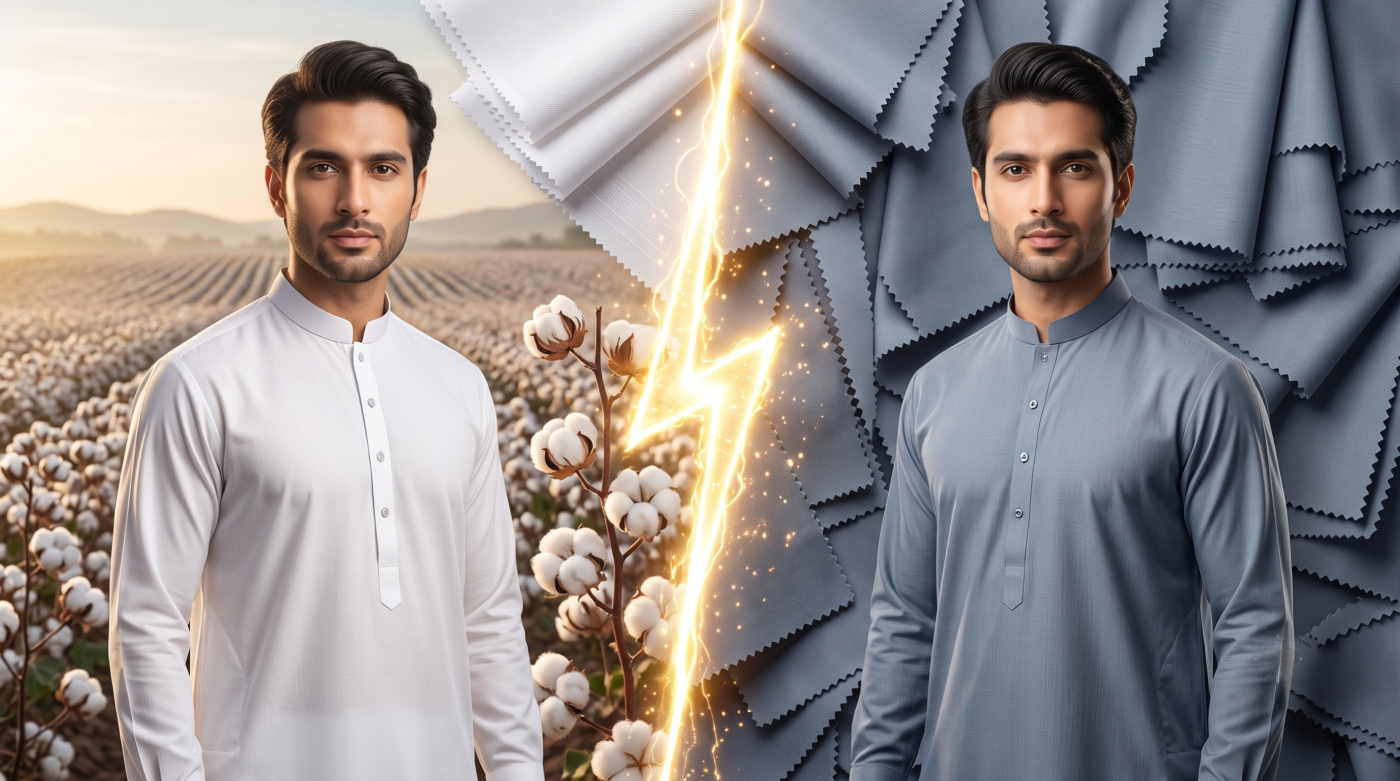
What Is Cotton Fabric?
Cotton is a natural fibre made from the cotton plant. It’s been used in South Asian clothing for centuries, and for good reason.
Characteristics:
- Soft, natural texture against the skin
- Breathable weave that lets air pass through
- Absorbs sweat instead of trapping it
Advantages:
- Excellent for hot, humid weather
- Gentle on sensitive skin
- Feels light even after hours of wear
Limitations:
- Wrinkles quickly and needs regular ironing
- Can shrink slightly after the first few washes
- Requires a bit more care to keep looking sharp
Best use cases: Daily wear, casual outings, summer shalwar kameez, and anyone who prioritizes comfort over low-maintenance styling.
What Is Wash and Wear Fabric?
Wash and wear (often just called “W&W”) is typically a cotton-polyester blend engineered for convenience. It was designed with one goal: less ironing, more wearing.
Characteristics:
- Smooth, slightly stiff finish
- Wrinkle-resistant even after washing
- Holds its shape through the day
Advantages:
- Barely needs ironing — a huge time-saver
- Dries faster than pure cotton
- Holds a crisp, formal look for longer
Limitations:
- Less breathable than cotton
- Can feel warmer in extreme heat
- Slightly less soft against the skin
Best use cases: Office wear, formal events, frequent travel, and anyone who wants a neat look without daily ironing.
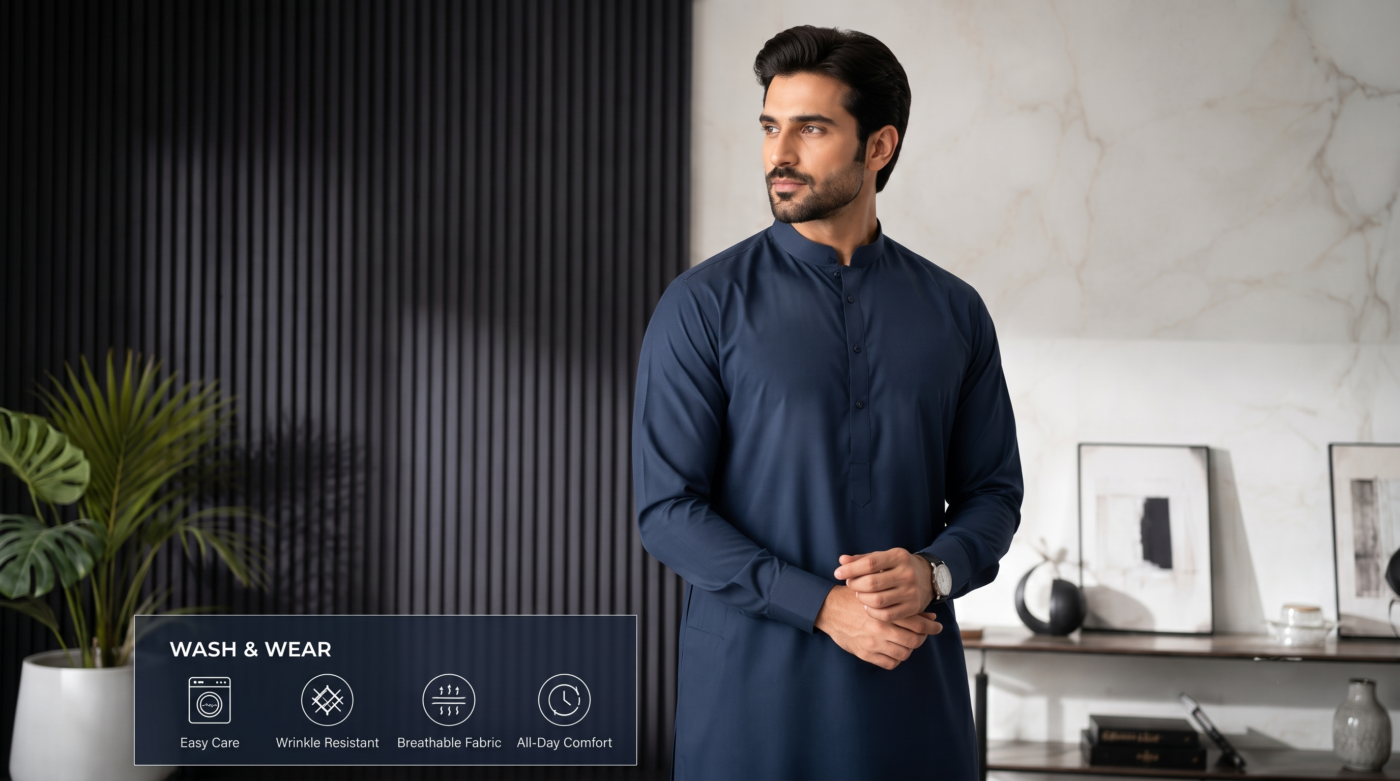
Cotton vs Wash and Wear: Side-by-Side Comparison
| Feature | Cotton | Wash and Wear |
| Comfort | Very soft, natural feel | Comfortable but slightly stiffer |
| Breathability | Excellent | Moderate |
| Wrinkle Resistance | Low | High |
| Ironing Needed | Frequent | Minimal |
| Durability | Good | Very good |
| Summer Performance | Excellent | Good |
| Winter Performance | Good | Excellent |
| Maintenance | Higher | Lower |
| Drying Time | Slower | Faster |
| Price | Mid-range | Mid to slightly higherf |
| Formal Wear Suitability | Good | Excellent |
| Casual Wear Suitability | Excellent | Good |
| Longevity | Good with care | Excellent |
Which Fabric Is Better for Pakistani Weather?
• Scorching summer season: Cotton is the best option due to its high breathability and absorbent nature during peak summer.
• Humid conditions: Once again, cotton emerges the victor, particularly in cities such as Karachi where humidity makes non-breathable materials uncomfortable.
• Suitability for office work: The wash-and-wear category is the more practical one since it remains crisp throughout the day.
• For everyday use: Cotton is the best for wearing comfortably at home, while the wash-and-wear category is the best when you need to go out.
• During travel: Wash and wear is the most convenient material, since it does not wrinkle easily inside a suitcase.
• For weddings and formal gatherings: Wash and wear looks good throughout the event.
Pros and Cons
Cotton
- Pros: breathable, soft, ideal for summer, skin-friendly
- Cons: wrinkles easily, needs regular ironing, slight shrinkage risk
Wash and Wear
- Pros: low maintenance, wrinkle-resistant, dries fast, holds shape
- Cons: less breathable, can feel warmer, slightly less soft
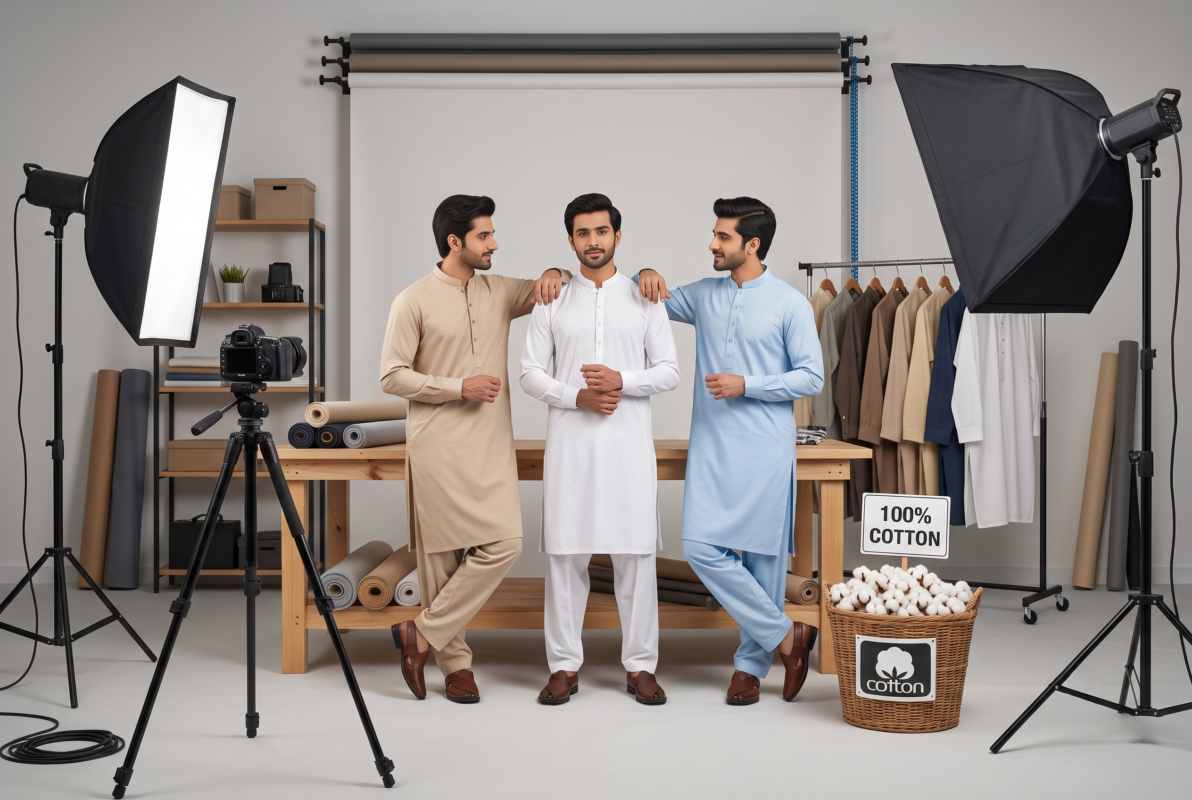
Which Fabric Should You Buy?
• White-collar workers: Wash & Wear – No need for ironing, always ready to go
• Students: Cotton – Reasonably priced, comfortable to wear all day
• Those who attend meetings frequently: Wash & Wear – Has a crisp look
• Businessmen: Both types in their wardrobe – Cotton for leisure, Wash & Wear for meeting clients
• Those who travel a lot: Wash & Wear – Not easily wrinkled
• The cost-conscious consumers: Cotton – Normally good value for money
Expert Buying Tips
1. See if the density of the weave is high because a dense weave indicates higher quality.
2. Touch the cloth yourself before purchasing; real cotton cloth is soft to touch and not like paper.
3. Question the supplier on the percentage of cotton and polyester in wash and wear cloth; a 65/35% combination is ideal.
4. Purchase loosely stitched cloth if there is any expected shrinking due to the first wash.
5. Use lighter colors for summer cottons and more structured ones for wash and wear formal cloth.
6. Make sure you always wash the new cloth once before stitching it.
7. If it’s wedding season, use only wash and wear or good cotton fabric to take photographs.
8. Buy cloth from a reliable source.
Conclusion
It must be said that there isn’t going to be any clear-cut winner when it comes to choosing between cotton and wash and wear since it all depends on you, your budget, and the erratic weather in Pakistan. Should you have to go through hot days with the only thing you want being to be comfortable then cotton wins hands-down. However, should you be one of those whose days involve offices and travels and who need to look neat at times, then wash and wear is the right choice for you.
Many Pakistani men find that having both of them in their wardrobes is the way to go.
Want to know which fabric suits you the best? Check out the ABTexOnline Premium Range of Unstitched Cotton & Wash and Wear fabrics.
Frequently Asked Questions
Is Wash and Wear better than cotton?
Not universally better — just different. Wash and wear is better for low-maintenance, formal use, while cotton is better for comfort and breathability in extreme heat.
Which fabric is cooler in summer?
Cotton is cooler in summer because it’s more breathable and absorbs sweat more effectively than wash and wear.
Which fabric lasts longer?
] Wash and wear generally lasts longer due to its polyester content, which resists wear and tear better over repeated washes.
Does Wash and Wear shrink?
Wash and wear shrinks minimally, if at all, since its polyester blend is designed to hold shape and size after washing.
Which fabric needs less ironing?
Wash and wear needs far less ironing. Its wrinkle-resistant finish keeps it looking neat straight out of the wash.