Wool vs Acrylic Shawls for Men in Pakistan: Which Is Better?
The choice of the right shawl for the winter is not only a matter of color and aesthetics. The fabric impacts how the shawl feels, how it should be cared for, how it hangs from your shoulders and how comfortable it is all day long. For Pakistani men, who have different winters in different cities and northern provinces, knowledge of the difference between wool and acrylic fabrics can simplify the shopping process.
The wool is the natural fiber with excellent moisture-wicking ability and warm feeling, and the acrylic is the artificial fabric which is usually used as the wool-like alternative. However, neither of these materials is always the better choice by default. The practical qualities of the fabric also depend on its fiber content, thickness, weave and other features. Whatever type of shawl you want to purchase – for wearing shalwar kameez, for going to work, for outdoors or for any other purpose – the above information will help you make the right decision.
Whatever type of shawl you want to purchase, whether for shalwar kameez, for work, for outdoors or for any other purpose, this guide will help you make the right decision. You can also browse our men’s shawls collection while reading.
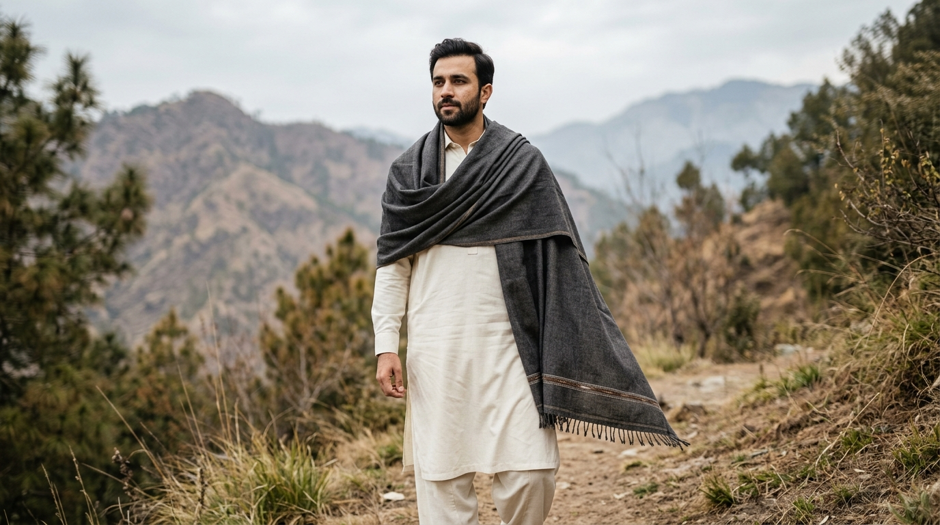
Wool vs Acrylic Shawls: A Quick Comparison
Before comparing the materials in detail, here is an overview of their typical characteristics.
| Feature | Wool Shawls | Acrylic Shawls |
| Fibre type | Natural animal fibre | Synthetic fibre |
| Warmth | Often provides effective insulation; construction matters | Can also provide effective insulation, depending on thickness and construction |
| Moisture handling | Absorbs and manages moisture differently from acrylic | Low moisture absorption and generally faster drying |
| Texture | Varies from fine and soft to coarse | Often designed to provide a soft, wool-like feel |
| Breathability | Often comfortable when moisture management matters | Performance depends on fabric construction and conditions |
| Maintenance | May require more careful handling | Often easier to care for, depending on the care label |
| Pilling | Possible | Possible, particularly with friction and use |
| Cost | Often more expensive | Often more budget-friendly |
| Suitable use | Daily wear, formal styling and colder conditions | Everyday use, casual styling and budget-conscious shopping |
These are general fibre characteristics, not guarantees about every shawl. A well-made acrylic shawl may suit a particular buyer better than a poorly constructed wool shawl.
1. What Is the Difference Between Wool, Wool Blends and Acrylic?
Understanding fibre composition is the first step towards making an informed purchase.
Wool shawls
Wool is a natural fiber derived from sheep. The nature of its structure makes it possible for it to hold insulating air, and wool is capable of absorbing moisture in its fiber while still being effective as an insulation material. This is why wool is widely used in making winter garments and shawls.
Nevertheless, the quality of wool differs. Good quality wool is soft and gentle to touch, whereas lower quality wool may cause itching sensation.
Wool-blend shawls
A wool blend is a fabric made of wool and one or more other fibers. This fiber can either be artificial or natural, depending on the product.
In this case, the tag reading “75% wool and 25% other fiber” means that the fiber content is composed of 75% wool. But the other fiber must be identified first before making an evaluation.
Fiber blends have advantages as they take properties from the two kinds of fibers they were made from. Their performance will depend on their kind and construction.
Acrylic shawls
Acrylic is an artificial fibre that is often found in garments and accessories meant to mimic the properties of wool in some ways. It provides softness and insulation, and is generally easier to care for compared to some wool-based items.
Acrylic does not automatically make an item inappropriate for winter use. The usability of this fabric depends entirely on the design of the shawl and the circumstances under which it would be worn.
More details about the properties of artificial fibres are provided in the technical description of acrylic fibres.
2. Which Shawl Is Warmer: Wool or Acrylic?
Warmth is one of the first things to think about while purchasing a man’s winter shawl.
Wool is a fabric that is appreciated due to its ability to insulate and absorb moisture. A textile research comparing woolen blankets with acrylic-fiber and cotton blend blankets established distinctions in insulation and moisture transport under the tested conditions. Nevertheless, the results of the research cannot be considered as an universal test for any wool and acrylic shawl. Read the research.
It is possible to get good insulation with acrylic because of the structure of the fabric and yarn made of acrylic.
These are some aspects of warmth to think about:
• Tickness: A thicker shawl may give more coverage, but thickness is not what gives the thermal performance of the shawl.
• Cloth construction: The type of weave determines how much air can be trapped by the fabric.
• Size: Larger shawls may give more coverage over the shoulders and body.
• Effect of wind: A loosely woven shawl behaves differently in windy environments than a denser shawl.
• The manner in which the shawl is worn: This also affects the coverage you get.
If you regularly spend long periods outdoors in cold weather, a well-made wool or high-wool-content shawl may be worth considering. If you need something for ordinary winter use in a comparatively mild climate, a suitable acrylic shawl may meet your needs. Do not assume that one fibre will always be warmer than the other. Compare the actual products wherever possible.
Do not assume that one fibre will always be warmer than the other. Compare the actual products wherever possible. For a wider look at winter options, read our complete men’s winter fabric guide or explore the men’s winter collection.
3. Why Shawl Weight and Size Matter
The weight of a shawl plays an important part in influencing the weight and comfort of the shawl when worn for hours.
While a lighter weight shawl would be easy to transport and wear indoors and outdoors, a heavy shawl would have a different look and drape.
But weight does not necessarily decide warmth.
Consider two shawls with equal size and shape. While one shawl might use a bulky yarn that holds air pockets, another shawl might have a flat yarn that is more dense. Although these two shawls would weigh almost the same, they will have differences in their look and feel.
When comparing products, check:
- The stated width and length.
- The weight in grams, if provided.
- The stated fibre composition.
- The thickness and visible texture.
- Whether the measurements and specifications are consistent throughout the listing.
4. Softness, Comfort and Everyday Wear
The shawl should be visually appealing, but at the same time, it shouldn’t be uncomfortable in comparison to any other type of garment that should touch your skin.
There is a lot of variance regarding the softness of wool.
Sometimes thin fibres can be very soft, and sometimes thick wool can irritate people who have sensitive skin.
Blends can either be soft or rough depending on the proportion and production process of the fabrics.
Acrylic shawls are manufactured in order to mimic the texture of wool.
Some consumers appreciate this fabric as it allows wearing an affordable accessory.
When you are buying a shawl, take into consideration your habits of wearing it.
If you are going to wear a shawl directly on your neck, then consider the softness of the material.
But if you are planning to use it mainly across the shoulders, then drapability and weight will become more significant.
Consider the time that you are going to spend wearing the shawl.
Whenever it is possible, inspect the material by yourself. When buying the item online, check the descriptions and images, and clarify information about the composition from the seller.
5. Breathability and Moisture Management
It becomes an issue when you transition from winter outdoor temperatures to warmer indoor temperatures.
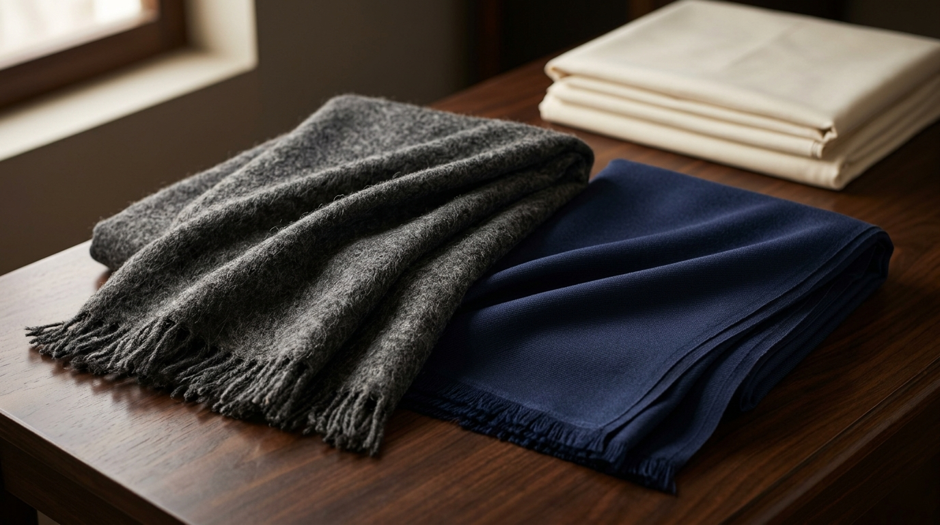
Wool can take up moisture inside the fibers, which makes it useful for wearing comfortably when there is a change in climate. Acrylic takes up little moisture and dries up quickly, based on the type of fabric and finish used.
None of these two properties indicate that wool can be comfortable while acrylic is not. Comfort will depend on the season, how active the wearer is, and what she wears under the shawl.
For instance, a person who goes out in the cold morning and remains for hours in the office will consider moisture management and adaptable comfort.
A person who wears the shawl over the shalwar kameez in the cool evening will be more concerned with softness, appearance and ease of maintenance.
Consider your regular activity rather than choosing a fiber just because it is called a winter fiber.
6. Which Shawl Is Better for Men’s Shalwar Kameez?
Wool and acrylic shawls can both complement traditional Pakistani clothing. The right choice depends on the occasion, colour, drape and overall appearance. If you are still choosing the suit itself, see our guide on how to choose the best fabric for men’s shalwar kameez and our traditional wear collection.
For everyday wear: For shopping, travelling, visiting neighbours and regular use with shalwar kameez, pick a shawl that is comfortable and easy to manage. Black, grey, brown and navy go with many outfits. Since you will use the shawl often, put practical care first. Our list of the top 10 shalwar kameez colors for men can help you match colours.
For office wear: Office wear needs a sleek look rather than a bulky one. The shawl should drape well and come in subtle colours that suit plain or lightly designed shalwar kameez. Wool and acrylic can both serve this purpose. The actual appearance of the cloth matters more than the name of the fibre. See also our best fabric for office wear guide.
For weddings and formal gatherings: A well-made shawl adds an elegant touch to traditional wear. Black and charcoal are versatile, and brown and similar muted colours suit cream, beige and dark outfits. Wool and wool blends attract buyers looking for a traditional warm item, while acrylic can also work when its look and finish match the outfit. For formal wear, focus on neat edges, uniform texture, colour matching and how it sits on the shoulders. Grooms can also read the best fabric for a groom’s wedding suit.
For Friday prayers and family visits: The ideal shawl is easy to carry, easy to wear and comfortable throughout the event. Rather than assuming you need a more expensive fabric, pick a product that suits your environment and clothes.
7. Choosing a Shawl for Different Regions of Pakistan
Pakistan experiences different winter conditions across its regions. Therefore, your location and routine should influence your choice.
Lahore and central Punjab
During winter in Lahore and other areas of Central Punjab, weather can differ from time to time. Think about your exposure to cold outside, the timing of travel in the morning, and the period that you are wearing the shawl.
A properly made shawl out of acrylic can be very useful for daily wear, while a shawl of wool or woollen blend will suit people who value natural feel and moisture control.
Karachi and warmer coastal areas
In relatively cold winter weather, there are bound to be some customers who would like to get a shawl that is comfy but not bulky.
Think of how thick, long, and covering you would like your shawl to be. It is not necessary for a shawl to be thick just because it is winter clothing.
Murree and northern regions
More extreme environments and extended time spent outside can necessitate layering systems of increased weight.
A quality piece of wool or wool-rich shawl could be an ideal choice, but it must not be mistaken for a substitute for a full-blown cold weather clothing system. Temperature, wind, activity levels and additional layers of clothes still matter. Finally, make sure that you pick the shawl based on your actual needs and not the name of your city.
8. Price and Value: Is a Wool Shawl Worth Paying More For?
Acrylic shawls are usually marketed as low-cost options, while items with a lot of wool may be expensive. Price depends on fibre quality, yarn, construction, finish, brand and size. Being expensive does not always mean being high quality or long-lasting.
When judging value, ask:
- How often will you wear this shawl?
- Is its texture comfortable for your skin?
- Does its design suit your clothes?
- Is there a proper description of its composition and dimensions?
- Are its care instructions reasonable?
- Is it within your budget?
For example, if you need an accessory for a mild winter, an economical acrylic option may do. If you wear a shawl very often and like the features of wool, a shawl with wool content may be a better fit.
To see what is available right now, visit the ABTex men’s shawls range. Compare the specs and price of each product before deciding, and do not automatically assume the most expensive one is the best. For more tips, read how to compare fabric prices without compromising quality.
9. How to Care for Wool and Acrylic Shawls
Proper care helps maintain a shawl’s appearance and texture.
Caring for wool shawls
Wool may be more delicate than some types of synthetic fabrics that require low maintenance. However, the care instructions of the item in question should always be checked because the cleaning process varies according to how it is made.
According to Woolmark, when it comes to washing wool items marked for hand washing, one should use warm but not hot water, about 30° C, and gentle detergents. Their advice is also to air dry appropriate wool items.
Do not twist or wring a delicate shawl hard. Treat it gently when cleaning and drying it.
Keep it clean and dry, and protected from dust and moisture.
Caring for acrylic shawls
Even though acrylic might be easier to clean, it is still the care label on the product itself that will dictate the cleaning procedure.
If you cannot use high temperatures because of the care label, try not to do so because it may cause problems with synthetic fabrics.
“Pilling” occurs when little balls of fibers start forming on the fabric’s surface due to frictions.
Gentle cleaning, minimal rubbing, and storage in places where the fabric will not get rubbed will prevent pilling.
In order to minimize the number of cleanings, keep the shawl fresh.
Proper care helps maintain a shawl’s appearance and texture.
Caring for wool shawls
Wool may be more delicate than some types of synthetic fabrics that require low maintenance. However, the care instructions of the item in question should always be checked because the cleaning process varies according to how it is made.
According to Woolmark, when it comes to washing wool items marked for hand washing, one should use warm but not hot water, about 30° C, and gentle detergents. Their advice is also to air dry appropriate wool items.
Do not twist or wring a delicate shawl hard. Treat it gently when cleaning and drying it.
Keep it clean and dry, and protected from dust and moisture.
Caring for acrylic shawls
Even though acrylic might be easier to clean, it is still the care label on the product itself that will dictate the cleaning procedure.
If you cannot use high temperatures because of the care label, try not to do so because it may cause problems with synthetic fabrics.
“Pilling” occurs when little balls of fibers start forming on the fabric’s surface due to frictions.
Gentle cleaning, minimal rubbing, and storage in places where the fabric will not get rubbed will prevent
10. What to Check Before Buying a Men’s Shawl Online
Review the following before placing an order. Our complete guide to buying men’s fabric online in Pakistan covers more of the same process.
Fibre content: It should be established whether the product is wool, wool blend, acrylic or something else. If only percents are indicated without total fibre content, ask the seller for further clarification.
Dimensions: You need to know the exact measurements of the width and length to establish whether the shawl will provide the amount of coverage desired by you.
Weight: Consider the weight provided as one of the parameters for comparison, but not as the total criterion of warmth and quality.
Pictures: Examine the texture, colours and finishings shown. Please note that lighting and monitor can influence the colour shade.
Care instructions: Ensure that all wash/dry instructions are provided before purchasing.
Price and availability: Make sure to confirm the price of the item, the colors available, and delivery information.
Price and availability: Confirm the price, available colours and delivery details. You can also read the return and refund policy.
Product Description: Ensure that there is consistency in measurement, composition, and othersp ecification details. In case the same listing shows contradicting information, clarify before depending on it. All these points will come in handy when purchasing online since it is impossible to feel the fabric or the shawl prior to purchase
Frequently Asked Questions
Is an acrylic shawl warm enough for winter in Pakistan?
It can be. Acrylic textiles can provide useful insulation, but performance depends on construction, thickness and how the shawl is worn. Buyers in colder conditions may prefer a more substantial shawl or additional winter layers.
Is wool always better than acrylic?
No. Wool is valued for its moisture-handling properties, while acrylic can be practical and comparatively easy to maintain. The better option depends on personal preference, budget, climate and the specific product.
What does 75/25 wool composition mean?
When a product is clearly labelled as 75% wool and 25% another fibre, the figures describe the proportions of the two components. Check the product listing or ask the seller to identify the remaining fibre if this information is not provided.
Are wool-blend shawls a good choice?
They can be. A blend combines wool with another fibre, and its properties depend on the materials used and how the textile is constructed. Check the composition rather than assuming every wool blend performs identically.
How can I choose a shawl for shalwar kameez?
Consider the occasion, colour, drape, dimensions and comfort. Neutral colours and a well-balanced fit are versatile for everyday and formal clothing. The material should suit your climate and care preferences. See our guide to shalwar kameez colors for ideas.
How should I wash a wool shawl?
Follow the specific care label. If the shawl is suitable for hand washing, use an appropriate gentle method, mild detergent and lukewarm water. Dry it according to the manufacturer’s instructions.
How can I reduce pilling on an acrylic shawl?
Reduce unnecessary friction, wash the shawl gently according to its care label and avoid rough surfaces that rub against the fabric. Pilling depends on the textile’s construction and use, so it cannot always be eliminated.
Final Thoughts: Which Men’s Shawl Should You Choose?
Choosing between wool and acrylic shawls depends on your priorities. If you appreciate the properties of natural fibres and moisture control, a wool shawl may work well. If you want an economical and practical alternative to wool, an acrylic shawl may suit you.
Before deciding, check the fibre content, size, construction, care instructions and cost of the actual shawl. Do not assume anything from terms like “premium” and “lightweight.”
Explore the ABTex collection of men’s shawls to compare options and pick one that complements your winter wear. Our men’s winter fabric guide will also help you choose the right fabric for traditional Pakistani attire.
The perfect shawl is the one that meets your real needs, feels comfortable to wear and is worth your money.