
How Much Fabric Is Required for a Men’s Shalwar Kameez?
Buying fabric for a men’s shalwar kameez is easy, but choosing the correct fabric length can be confusing. Whether you’re purchasing fabric online or from a local market, ordering the right number of meters helps avoid unnecessary costs and stitching problems. In this guide, you’ll learn exactly how much fabric is required based on height, body size, fabric width, and stitching style.
Determining the correct measurements is not only about making the best purchase from an economical point of view; it also determines the comfort level, fit, and even looks of the shalwar kameez after stitching. Here is a detailed guide on the amount of fabric required for the shalwar kameez, depending upon different factors.
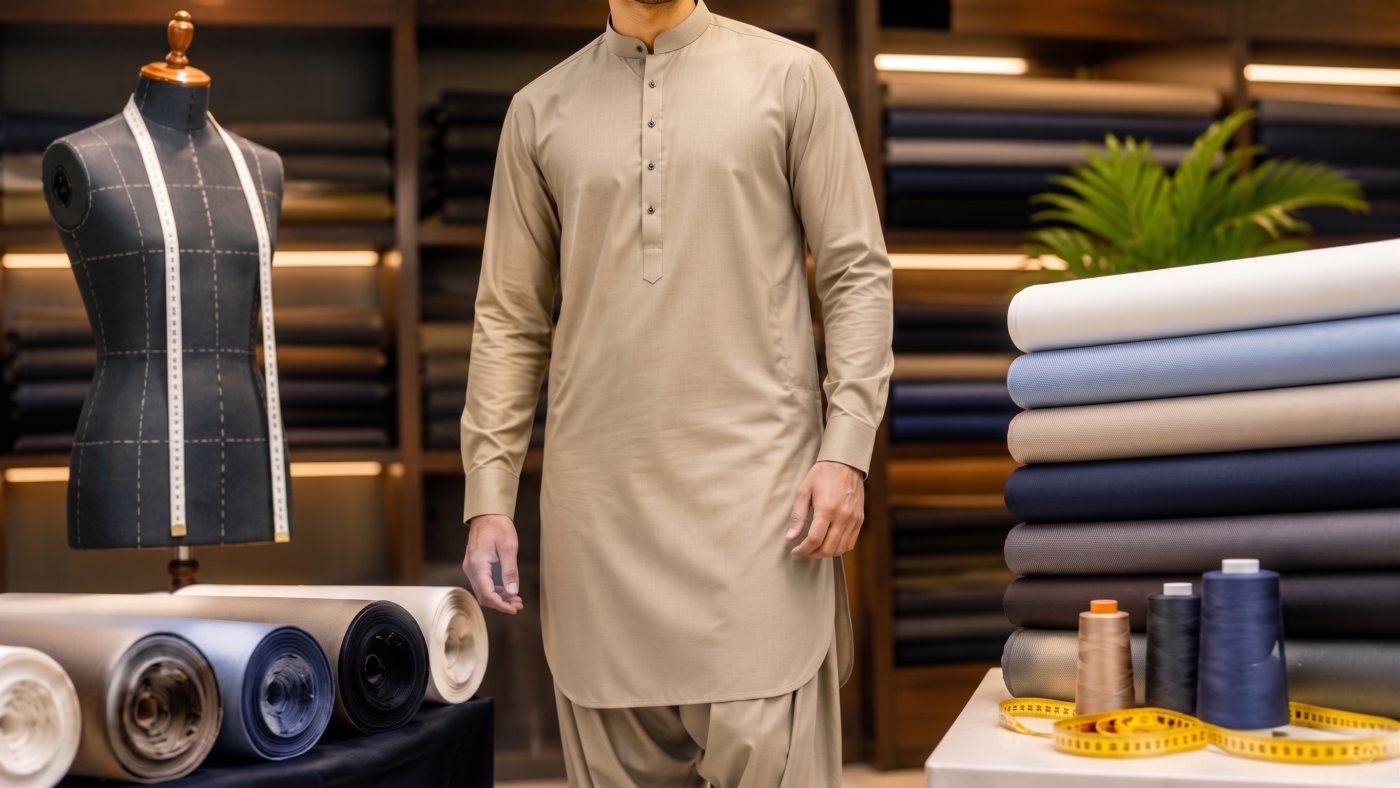
Standard Fabric Measurement for Men’s Shalwar Kameez in Pakistan
For an average-height man, a standard men’s shalwar kameez typically requires 4.5 to 5 meters of fabric, which is roughly 5 to 5.5 yards.
This amount usually covers:
- The kameez (shirt), which takes about 2.25 to 2.5 meters
- The shalwar (trousers), which takes about 2.25 to 2.5 meters
This is the most common measurement used across Pakistan for standard tailoring, and it’s the size most unstitched fabric pieces are cut to at ABTex Online.
Fabric Requirement Based on Height
Height plays a direct role in how much fabric you’ll need, since taller men need longer kameez length and shalwar length.
| Height | Fabric Required |
|---|---|
| Up to 5’5″ | 4–4.5 meters |
| 5’6″–5’9″ | 4.5–5 meters |
| 5’10″–6’1″ | 5–5.5 meters |
| Above 6’1″ | 5.5–6 meters |
Does Fabric Width Affect the Required Length?
Fabric width directly affects how much cloth is needed. Wider fabrics allow tailors to cut more efficiently, reducing the total fabric length required. Always check the fabric width mentioned in the product description before placing your order.
Standard width (29-30 inches) Most local materials come in this width and need the whole 4.5 – 5 meters discussed earlier.
Increased width (58-60 inches) With the increased fabric width, the tailor has room to make effective cuts and save one half meter length of the material.
It is always a good idea to check the fabric width before making any purchase, and this is indicated on the fabric description.
Fabric Requirement for Different Styles
The cut and style of your shalwar kameez also changes how much fabric your tailor will use.
Traditional Fit
A traditional, looser fit with a fuller shalwar typically needs the full standard measurement of 4.5 to 5 meters.
Regular Fit
A regular fit, which is neither too loose nor too tight, generally works within the same 4.5 to 5 meter range with minimal wastage.
Slim Fit
Slim fit designs use slightly less fabric on the body but may need extra length if the kameez is designed longer. Around 4 to 4.5 meters is usually enough.
Pathani Style
Pathani suits often use a looser, straighter cut and slightly wider shalwar, so 5 to 5.5 meters is a safer estimate.
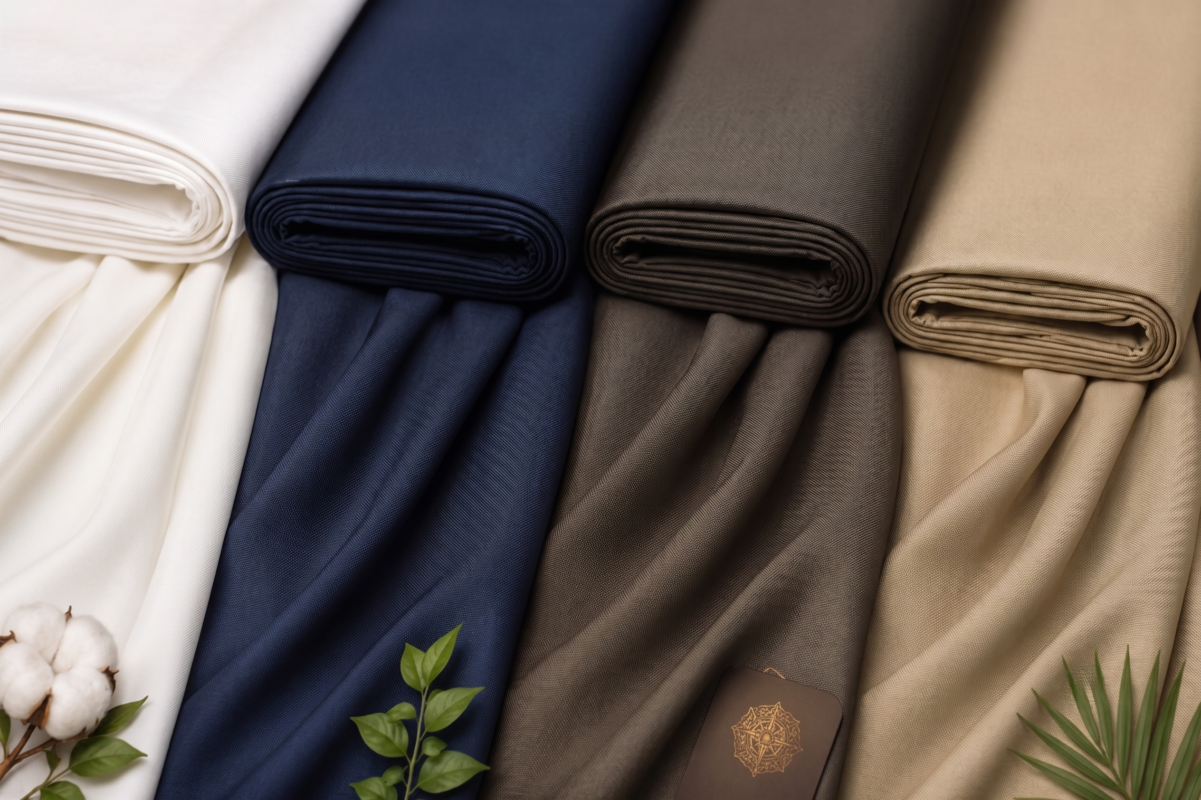
How Different Fabrics Affect Fabric Requirements
Besides appearance and comfort, the fabric will determine how much you need to order.
Cotton is breathable and somewhat susceptible to shrinking after the first wash. In this case, it’s better to include an extra bit – about a quarter of a meter.
Wash & Wear is a fabric that can be worn at any time due to its elasticity and lack of shrinkage. Standard measurement is enough.
Boski fabric has more drape than other fabrics, and since it’s usually used for semi-formal occasions, many people like an extra half-meter length in their kameezes.
Latha is a lightweight fabric and affordable one. It suits everyday wear. Usually, the standard measurement is enough.
If you want to learn more about various fabrics, visit ABTex Online where you will find Wash & Wear, Cotton, Boski, and Latha fabric, all measured with accurate standard measurements.
Common Mistakes People Make When Buying
Fabric
Even experienced buyers fall into this trap occasionally. Here are some common blunders to avoid when buying cloth:
• Assuming that all pieces of cloth have the same width without taking it into consideration
• Failing to consider shrinkage in case of cotton material
• Measuring by estimation without considering actual height and preferred style
• Buying minimum material without having any allowance for mistakes during tailoring
• Discounting the style issue because Pathani or traditional styles consume more material than slim styles
Proper planning while buying can save a lot of hassle during tailoring.
Expert Tips Before Buying Unstitched Fabric
Remember these helpful hints before making a final decision on your order:
1. Make sure to always measure the dimensions of the product before placing the order.
2. If uncertain about the dimensions, add an additional half meter, it will cost much less than ordering again.
3. Think about the desired length of kameez, because the lengthier kameez requires more cloth than the short ones.
4. Take into account the type of material used, especially if you are going to buy cotton and anticipate shrinkage.
5. Order from a reputable supplier who provides information about the measurement of fabrics.

Conclusion
For most men in Pakistan, 4.5 to 5 meters of fabric is enough for a standard shalwar kameez. However, your height, body size, stitching style, and fabric width can increase or reduce the required length. Before placing your order, always check the fabric width and consult your tailor if you’re unsure. Choosing the correct fabric measurement ensures a better fit and avoids unnecessary expenses.
After you have figured out the amount of fabric required, the next important thing is to choose fabrics worthy of being tailored. ABTex Online provides quality fabrics with correct measurements like Wash & Wear, Cotton, Boski, and Latha so that you may buy with full assurance and get the shalwar kameez of your choice.
Frequently Asked Questions
1. How many meters of fabric are needed for a men’s shalwar kameez?
On average, 4.5 to 5 meters of fabric is enough for a standard men’s shalwar kameez, depending on height and style.
2. How much fabric is required for a men’s suit in yards?
In yards, this typically comes to around 5 to 5.5 yards for an average height and standard fit.
3. Does fabric width change how much I should buy?
Yes. Wider fabric (58–60 inches) may require slightly less length compared to standard width fabric (29–30 inches).
4. Do taller men need more fabric for a shalwar kameez?
Yes. Taller men usually need 5 to 5.5 meters or more, especially for a longer kameez or Pathani style.
5. Which fabric is best for everyday wear, Cotton or Wash & Wear?
Both are popular, but Wash & Wear tends to hold its shape better with less shrinkage, making it a practical everyday choice, while Cotton offers superior breathability.
6. Should I buy extra fabric just to be safe?
Adding a small buffer, around a quarter to half a meter, is generally a good idea, especially for cotton fabrics or fuller cuts.
7. Can 4 meters of fabric make a men’s shalwar kameez?
Only for shorter or slim individuals using wider fabric. Most adults require at least 4.5–5 meters.
8. Is 5 meters enough for a Pathani suit?
Usually yes, but taller or broad-built men may require 5.5 meters.